
Frontier of Artificial Network
A Series of Invited Talks @ FAN Group, CityU
The Upcoming Talk
Machine Unlearning: A Reverse Process in AI Models
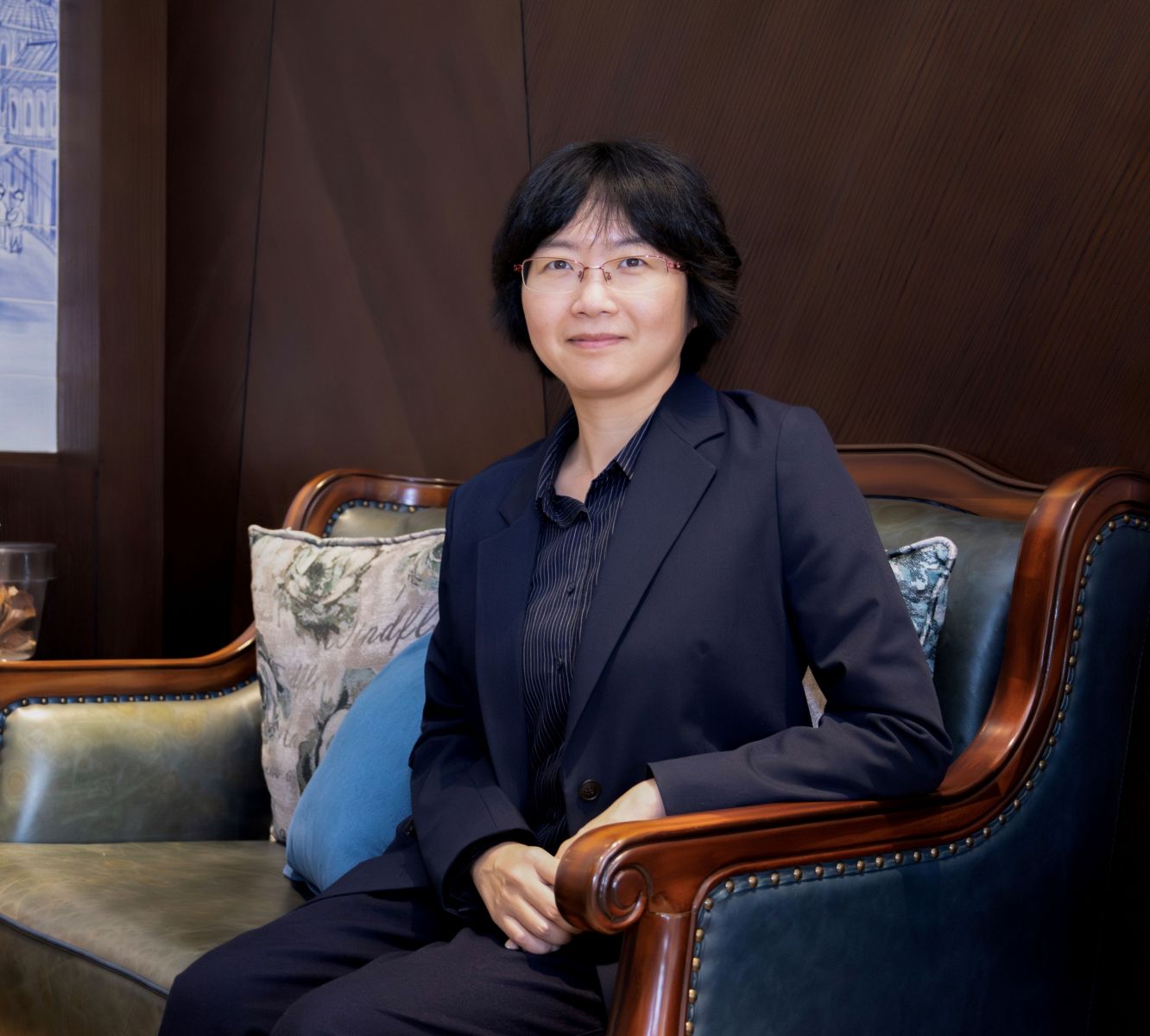
Biography: Tianqing Zhu is currently the Dean of Faculty of Data science at City University of Macau, she is also a Professor and PhD supervisor at the City University of Macau and a recipient of the Young Scientists Fund (Class A) of the National Natural Science Foundation of China (NSFC). Before joining the City University of Macau, Zhu Tianqing was a Lecturer at Deakin University in Australia, an Associate Professor at the University of Technology Sydney, and a Professor at China University of Geosciences (Wuhan). She has led couple of NSFC projects, and undertaken a number of projects funded by the Macao Science and Technology Development Fund (FDCT). Before that, she had served as a member of the Australian Research Council (ARC) College of Experts and led & participated in eight ARC-funded projects. As the corresponding or first author, she has published more than 60 CCF-A rated papers in top venues such as NDSS, S&P, USENIX Security and IEEE Transactions, and over 400 SCI-indexed papers. She serves as a Program Committee member for renowned international conferences including CCS, USENIX and AAAI, and as an Associate Editor for several SCI journals. She has been named among Stanford University's World's Top 2% Scientists and has supervised more than 30 PhD students. She is committed to research in artificial intelligence security, focusing on key issues such as attack and defense for intelligent models, data privacy, and the relationship between security and fairness, with the aim of enhancing the security, privacy protection and output fairness of intelligent models.
Abstract: Traditional machine learning constructs models by organizing knowledge from training data. Machine unlearning acts as its reverse process: it seeks to selectively erase the influence of specified training samples, concepts or memorized content from an already trained AI model, ideally making the model behave as if the target data had never been used during training. Driven by privacy regulations, user data deletion rights, removal of poisoned or biased training content, and safety requirements for large models, machine unlearning avoids the heavy cost of full retraining by developing lightweight forgetting mechanisms. This talk will introduce the core definition and paradigm of machine unlearning, distinguish exact unlearning and approximate unlearning, review representative algorithm families, and discuss key evaluation dimensions: unlearning effectiveness, preservation of model utility on remaining data, computational overhead, and verification challenges. We will also highlight open research difficulties, including knowledge entanglement in deep neural networks, persistent memorization in large language models, and attacks that recover erased information. Finally, we outline real-world application scenarios and future directions in the forgetting capability.
The Upcoming Talk
An L2 Convergence Analysis of Neural Approximation via Wavelet Frame Theory

Biography: Mikyoung Lim is a professor in the Department of Mathematical Sciences at KAIST. She received her Ph.D. in mathematics from Seoul National University in 2003. She held postdoctoral and faculty positions at École Polytechnique and Colorado State University, respectively, before joining KAIST. Her research interests include inverse problems, spectral analysis of integral operators, and neural network approximation. She was a plenary speaker at the 2025 Applied Inverse Problems (AIP) Conference.
Abstract: We study neural-network approximation with vector-to-scalar activation functions. Using wavelet frame theory on spaces of homogeneous type, we establish an averaging-kernel condition under which the activation function induces a wavelet system. Combining this with $L^2$-convergence results for wavelet expansions, we obtain convergence estimates for neural approximation, including cases with oscillatory and nonsmooth activation functions.
Previous Talks
| Date | Speaker | Title | Materials |
|---|---|---|---|
| October 13, 2026 | Yubo Wei | To Understand AI is to Understand Oneself | [Poster] |
| October 9, 2026 | Jianxi Gao | Network Robustness and Resilience: Theory and Applications in Human, Natural, and Infrastructure Systems | [Poster] |
| September 18, 2026 | Jicong Fan | Towards Reliable and Generalizable Anomaly Detection | [Poster] |
| September 10, 2026 | Tianwei Zhang | Visual Perception for Robot Loco- & Manipulation | [Poster] |
| September 2, 2026 | Baoyuan Wu | Current Status and Future Prospects of Deepfake Detection | [Poster] |
| August 26, 2026 | Liangdi Zhang | How Curvature Encodes Geometry: Spectra, Geometric PDEs, and Vector Bundles | [Poster] |
| August 5, 2026 | Yuekang Li | Detecting Bugs in LLM Ecosystem | [Poster] |
| July 28, 2026 | Yiran Jiang | Domain Adaptation Method Based on Decision Boundary Search in Frozen Feature Space | [Poster] |
| July 27, 2026 | Haofeng Li | Data-centric AI Technology | [Poster] |
| July 20, 2026 | Adeel Razi | Synthetic Biological Intelligence: Learning, Adaptation, and Brain-Inspired AI | [Poster] |
| July 14, 2026 | Ran Cheng | From AI Coding to Software Evolution: Towards Trustworthy Evolutionary Agent Systems | [Poster] |
| July 13, 2026 | Yongqiang Cai | Neural Networks as a Discretization of Dynamical Systems | [Poster] |
| July 11, 2026 | Renfeng Peng | Geometric Methods for Low-Rank Tensor Optimization Problems | [Poster] |
| June 25, 2026 | Hongkang Li | Towards a Mathematical Theory of Foundation Models | [Poster] |
| June 18, 2026 | Shuai Zhang | Towards Theoretical Foundations of Foundation Models: Feature Learning, Optimization Dynamics, and Generalization | [Poster] |
| June 11, 2026 | Miao Zhang | Large Model Compression and Inference Acceleration | [Poster] |
| June 8, 2026 | Jinwei Zhang | Lesion-Centric Quantitative Neuroimaging: Integrating MRI Innovation and AI-Driven Analysis for Neurodegeneration | [Poster] |
| June 5, 2026 | Xiaolin Hu | Brain-Inspired Speech Separation Models | [Poster] |
| June 5, 2026 | Lisha Chen | Principled Preference-Guided Multi-Objective Learning: Navigating and Uniformly Traversing the Pareto Front | [Poster] |
| May 28, 2026 | Shirui Pan | Boosting Large Language Model Reasoning with Knowledge Graphs | [Poster] |
| May 13, 2026 | Xiaojuan Qi | 3D Representations for World Modeling and Generation | [Poster] |
| May 7, 2026 | Yuantian Miao | The Audio Auditor: User-level Membership Inference in Internet of Things Voice Services | [Poster] |
| Apr 29, 2026 | Han Zhong | Toward Principled Reinforcement Learning: From Statistical Complexity to Representation Complexity | [Poster] |
| Apr 16, 2026 | Yudong Zhang | AI-Integrated Colorectal Cancer Research: Challenges, Progress and Innovation | [Poster] |
| Apr 9, 2026 | Bin Gao | Low-rank Optimization Through the Lens of Geometry | [Poster] |
| Mar 31, 2026 | Zhuo Sun | Multilevel Control Functional | [Poster] |
| Mar 25, 2026 | Jiancheng Yang | Scaling Medical AI Without Scaling Cost in the Era of Generative AI | [Poster] |
| Mar 24, 2026 | Yang Cao | Differential Privacy in LLM Fine-Tuning: What It Protects, What It Costs, and What It Doesn’t | [Poster] |
| Mar 18, 2026 | Zijun Cui | AI + Knowledge: Unleashing the Power of Domain Knowledge for Advanced Artificial Intelligence | [Poster] |
| Mar 12, 2026 | Chenxi Yuan | Enhance Prediction of Alzheimer’s Disease with Generative AI | [Poster] |
| Mar 3, 2026 | Ren Wang | Robustness Through Collective Intelligence | [Poster] |
| Feb 28, 2026 | Huiyu Zhou | Constructing Masterpieces From Missing Pieces | [Poster] |
| Feb 10, 2026 | Guibo Luo | Benchmarking Multi-Party Privacy Computing and Exploring New Collaboration Paradigms | [Poster] |
| Feb 5, 2026 | Zeyu Zhang | Bridging Scene Understanding and Motion Generation in Robot Manipulation | [Poster] |
| Jan 28, 2026 | Md Sajid | Interpretable and Robust Randomized Neural Networks for Real-World Learning | [Poster] |
| Jan 21, 2026 | Bing Yang | Shape-Aware Deep Learning for AS-OCT Analysis: Segmentation and Structural Uncertainty | [Poster] |
| Jan 14, 2026 | Mengdi Zhao | Simulating Biological Intelligence: Bridging High-Fidelity Neuronal Modeling with Embodied Agents | [Poster] |
| Jan 7, 2026 | Xiangyu Chang | Research on Efficient and Fair Data Element Pricing Mechanisms | [Poster] |
| Dec 19, 2025 | Shujian Huang | Cross-lingual Knowledge Learning and Reasoning in Large Language Models | [Poster] |
| Dec 17, 2025 | Haotong Qin | Extreme Discretization: Towards Efficient Intelligence and Systems in the Scaling Era | [Poster] |
| Dec 3, 2025 | Ningning Ding | From Fair Unlearning Algorithms to Incentive-Compatible Mechanisms in Federated Unlearhing | [Poster] |
| Oct 23, 2025 | Raian Ali | AI Design vs. Human Attitude, Learning, and Dependency | [Poster] |
| Oct 22, 2025 | Yuwen Li | Higher Order Approximation Error Bounds for ReLU Neural Networks in Korobov Space | [Poster] |
| Oct 13, 2025 | Weijie Su | The ICML 2023 Ranking Experiment: Empirical Performance and Analysis of the Isotonic Mechanism | [Poster] |
| Sep 17, 2025 | Fanghui Liu | Bridging Theory and Practice: One-step Full Gradient Can Suffice for Low-rank Fine-tuning in LLMs | [Poster] |
| Aug 20, 2025 | Fan Yang | RNA Recognition and Targeted Degradation: Mechanisms and Engineering Strategies based on RNA-Binding Domains (RBDs) | [Poster] |
| Aug 4, 2025 | Tao Luo | The Theory of Parameter Condensation in Neural Networks | [Poster] |
| Jul 29, 2025 | Hangxin Liu | Embodied Mobile Manipulation: Trajectory Optimization vs. Diffusion | [Poster] |
| Jul 18, 2025 | Yide Liu | Constructing High-performance Robotic Insects With Origami Transmission Mechanism | [Poster] |
| Jul 15, 2025 | Hai Dong | Mobile Edge Intelligence: When AI Meets Mobile Edge Computing | [Poster] |
| Jun 30, 2025 | Guangyi Chen | Causal Representation Learning for Visual Understanding | [Poster] |
Organizers
Fenglei Fan, Assistant Professor in the Department of Data Science at the City University of Hong KongShuren Qi, Postdoctoral Fellow in the Department of Data Science at the City University of Hong Kong